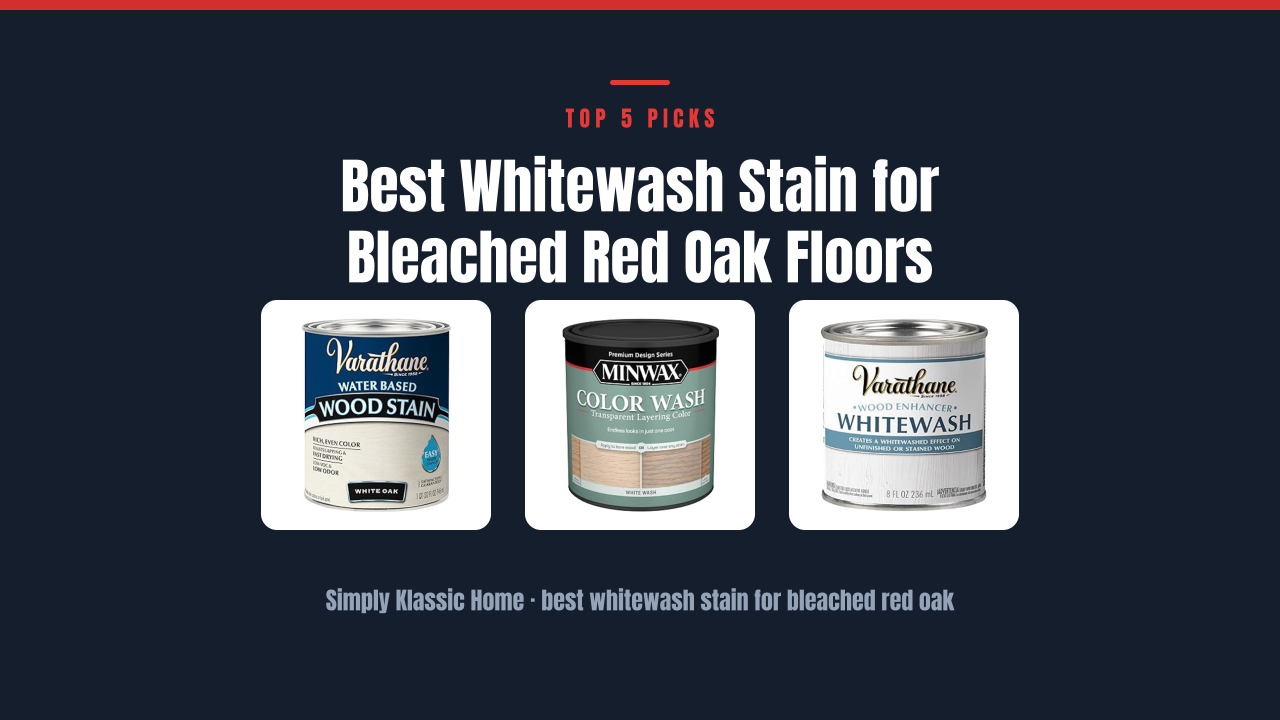
The best best whitewash stain for bleached red oak is the Varathane White Oak Wood Stain, which neutralizes the stubborn pink undertones of bleached red oak while preserving natural grain definition. It delivers a balanced, muted Nordic look in a single coat without turning chalky or muddy.
Want more control over sheer layering instead? The Minwax Color Wash Transparent Layering gets you there, as long as you are willing to apply multiple thin passes to build your desired opacity.
As an Amazon Associate, I earn from qualifying purchases.
Before you buy any finish, understand that red oak contains heavy tannins and porous open grain that react unpredictably to standard white pigments. If your timber was treated with two-part wood bleach, certain oil-based formulas can turn yellow or flash amber over time.
Our recommendations come from analyzing manufacturer technical datasheets, chemical formulation safety data, and verified woodworker feedback across hundreds of refinishing projects rather than physical workshop tests.
Quick Answer: The Best Whitewash Stain for Bleached Red Oak
Varathane White Oak Wood Stain takes the top spot for its ability to cut red oak warmth without masking the cathedral grain pattern.
Varathane White Oak Wood Stain (Best Overall Whitewash Stain): Delivers consistent pink neutralization with excellent grain clarity in one simple step.
Minwax Color Wash Transparent Layering (Best for Buildable Sheer Opacity): Water-based wash that lets you control tint depth through layered wiped coats.
This formula is engineered specifically to give red oak the muted, pale appearance of natural white oak. Standard pure white stains often react with raw red oak fibers to create an unnatural chalky layer or a bubblegum pink cast. In user project reports, this stain offsets that exact warm undertone by balancing cool neutralizing tones with translucent white pigments.
Application is straightforward using a high-density foam brush or clean lint-free cloth. The high-solids formulation dries within one hour, letting you complete your stain coat and clear protective sealer in a single afternoon session without excessive wait times.
Flaws but not dealbreakers. If your bleached red oak has heavy variation in surface porosity, this stain can grab slightly darker in the coarse earlywood grain lines. Applying a pre-stain wood conditioner beforehand resolves any patchy absorption across wide plank table tops.
Want a finish that emphasizes buildable sheerness instead? The Minwax Color Wash Transparent Layering lets you feather on extremely light coats with greater working transparency.
⚠
Compatibility: Always use a water-based non-yellowing polyurethane or polycrylic topcoat over this stain to prevent ambering the bleached oak look.
Pros
✓Neutralizes bleached red oak pink tones without turning cloudy.
✓Fast 1-hour dry time speeds up multi-step furniture finishing.
✓High-solids concentration delivers strong coverage in one pass.
✓Maintains natural ray fleck and cathedral wood grain definition.
Cons
✕Can over-saturate coarse open pores if left un-wiped too long.
✕Requires thorough stirring to re-suspend settled pigments.
✕Needs careful sanding preparation for uniform surface uptake.
Base Type
Oil-Modified
Dry Time
1 Hour
Opacity
Semi-Transparent
Container Size
1 Quart
Best for: Woodworkers seeking a true white-oak look on bleached red oak furniture.
This water-based color wash gives you total control over how much raw grain shows through your finish. Unlike thick pickling pastes that instantly coat the surface, this formula acts as a sheer glaze that tints wood fibers gently. It is particularly forgiving if you want a subtle coastal wash over freshly bleached red oak boards.
Because it is a water-based wash, clean-up requires only warm water and soap. You can feather your edges easily during application, which prevents visible lap marks on wide dining tabletops or interior cabinetry doors.
Flaws but not dealbreakers. Because water naturally raises wood grain, you will need to perform a light de-nibbing sand with 320-grit paper after your first coat dries. If your red oak was aggressively bleached, you may need two to three coats to fully conquer stubborn salmon tones.
If you prefer an all-in-one product that neutralizes red tones in a single heavy pass, look at the Varathane White Oak Wood Stain above.
Grain-Raise: Water-based washes raise wood fibers on sanded oak. Lightly sand with 320-grit after drying to restore glass-smooth texture.
Pros
✓Ultra-sheer formula allows incremental opacity adjustments.
✓Water-based chemistry cleans up with simple warm water.
✓Low odor makes it pleasant for indoor basement workshops.
✓Does not yellow when coated with waterborne clear acrylics.
Cons
✕Requires multiple coats if heavy white opacity is needed.
✕Raises grain on porous oak, requiring light knock-down sanding.
✕Dries quickly, requiring you to work in narrow sections.
Base Type
Water-Based
Dry Time
2 Hours
Opacity
Sheer / Transparent
Container Size
1 Quart
Best for: DIYers who want to build soft white tones gradually without masking wood grain.
This enhancer is formulated to sit directly inside the deep, open grain pores of red oak for a striking cerused effect. Red oak features wide, open tubular pores that swallow heavy white pigments. While conventional stains can leave the high wood flats looking milky, this enhancer lodges white pigment firmly in the valleys while wiping cleanly off the high ridges.
You apply it generously across the wood grain, let it sit for two to three minutes, and then wipe firmly across the grain with a clean shop towel. This packs the white enhancer into the pore structure while keeping the overall bleached wood field bright and clear.
Flaws but not dealbreakers. The half-pint container is relatively small, making it suitable for single furniture pieces rather than expansive hardwood flooring. You must also work in smaller sections because the pigment sets rapidly once spread across raw wood.
Tackling an entire room or wide-plank flooring project? The WOCA Denmark Wood Lye provides the volume and open working time needed for expansive square footage.
Wiping: Always wipe excess product perpendicular to the wood grain direction to avoid pulling pigment back out of the pores.
Pros
✓Packs bright white pigment directly into open oak grain pores.
✓Creates a high-contrast cerused or limed oak aesthetic.
✓Wipes clean off high surface ridges without streaking.
✓Small size minimizes waste on single chair or tabletop builds.
Cons
✕Half-pint can runs out quickly on large furniture sets.
This is the pick for anyone who dreads open cans, sticky rags and stained countertops. The stain lives in a squeeze bottle with an integrated applicator tip, so you dab it straight onto picture frames, shelving edges, mirror surrounds or a scuffed spot on an existing whitewashed piece. Verified buyer feedback consistently praises the controlled dispensing for touch-up work.
Being water-based, the whole job cleans up with soap and warm water. Squeeze a small bead along the wood, spread it with a cloth or foam pad, and wipe back the excess. Low odor makes it realistic for apartment balconies and indoors during winter.
Flaws but not dealbreakers. This is the lowest-rated product in our lineup at 4 out of 5 stars, with buyers noting the small volume runs out fast and the tip needs immediate cleaning or it clogs. It is also awkward for large, flat surfaces where a brushed or ragged quart goes on more evenly.
Working on a full tabletop or a set of chairs? The Varathane White Oak Wood Stain quart above covers far more square footage with the same pale character.
⚠
Sizing: Plan this bottle for projects under roughly 20 square feet. Flooring, tabletops and full cabinets will burn through it in minutes.
Pros
✓Integrated tip dispenses stain exactly where you point it.
✓Squeeze control makes streak-free touch-ups genuinely easy.
✓Water cleanup with no mineral spirits required.
✓Low odor suits indoor and small-space crafting.
Cons
✕Lowest buyer rating of the five picks at 4 out of 5.
✕Tiny volume forces you into a second bottle for bigger jobs.
✕Applicator tip clogs if you skip immediate cleaning.
Base Type
Water-Based
Applicator
Built-In Tip
Container Size
Small Squeeze Bottle
Best Use
Crafts and Touch-Ups
Best for: Crafters and renters who want tidy, controlled whitewashing on small pieces without any pour-and-drip mess.
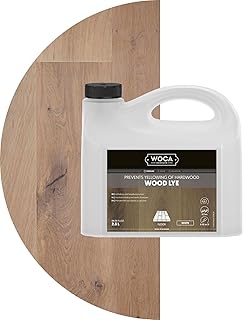
This is the genuine Scandinavian lye treatment for keeping red oak pale for decades, not just one season. Wood lye is a reactive, water-based white treatment that alters the wood surface itself to slow the yellowing and darkening red oak is famous for. The 2.5-liter container is built for floors, stair treads and wide paneling, and it carries the strongest buyer rating here at 4.6 out of 5.
The process differs from every stain above: you flood the sanded surface, keep it wet for the stated dwell time, then wipe thoroughly and let it cure before sealing. That is why the finish reads as raw-wood patina instead of a coated look, the exact style behind Danish driftwood floors.
Flaws but not dealbreakers. It is the most technique-sensitive product here and demands gloves, eye protection and careful section work, since lapping shows if you let edges dry. You also must follow up with a compatible oil or finish to lock in the result, adding a second purchase and a second day.
If that chemistry sounds like too much for a weekend, the Minwax Color Wash Transparent Layering delivers a similar pale wash with plain water cleanup and no reactivity.
⚠
Safety: This is a reactive lye product, not a conventional stain. Wear chemical-resistant gloves and goggles, ventilate the room, and keep children and pets away until fully cured and oiled.
Pros
✓2.5-liter volume covers floors and other large surfaces.
✓Genuinely reduces the yellowing red oak develops over time.
✓Highest buyer rating in this lineup at 4.6 out of 5.
✓Creates the authentic Scandinavian raw-wood patina.
Cons
✕Caustic handling requires real protective equipment.
✕Needs a follow-up oil or finish to complete the system.
✕Uneven dwell times leave visible lap marks on floors.
Base Type
Water-Based Lye
Container Size
2.5 Liters
Finish
White Patina
Intended Use
Indoor Wood
Best for: Floors, stairs and large installations where an authentic Scandinavian pale-wood finish matters more than a fast weekend job.
Buying Guide: Chemistry, Opacity, Project Size and Topcoats
A whitewash stain tints the wood; it never hides the grain. That single fact drives every decision below, because bleached red oak behaves differently than pine, poplar or white oak when white pigment hits it.
Water-based or oil-based stain for bleached oak?
Water-based formulas like the Minwax Color Wash Transparent Layering keep their bright white color permanently, but they raise the grain, so plan on a light 320-grit sanding between coats. The oil-modified Varathane White Oak Wood Stain levels out beautifully and helps achieve a smooth, streak-free finish on big flat panels. Whatever you choose, work the product with the grain and wipe before it sets; the finishing research from the USDA Forest Products Laboratory has documented for decades that surface prep and application technique affect durability as much as the product itself.
How white do you want the oak?
Three looks are possible from this lineup. A sheer washed look needs two or three thin layers of the Minwax wash. A solid pale-oak tone in one pass calls for the Varathane quart.
A high-contrast cerused look, where white sits only in the pores, is the Varathane 355305's specialty, and red oak's coarse grain makes it the ideal canvas.
Match the container to your square footage
Coverage ranges from a half pint to 2.5 liters across these picks. Roughly speaking, a half pint handles one small table, a quart covers a furniture set, and the WOCA Denmark Wood Lye is the only option sized for whole floors. Buying too small is the most common regret in buyer reviews.
Topcoats decide whether the white stays white
This is where bleached oak projects fail. Standard oil-based polyurethane ambers within months and drags your pale oak back toward yellow. As of 2026, both Varathane and Minwax recommend water-based polycrylic or waterborne polyurethane over whitewash, and the Less Mess bottle pairs naturally with the same clear coats used in other classic decor projects around the home.
Who Should NOT Buy Best Whitewash Stain for Bleached Red Oak
Whitewash stain is the wrong purchase for three kinds of buyers. Here's who they are, and what to look at instead.
You Want a Solid Painted Look
If your goal is opaque color with no grain showing, no white stain will get you there, because every product in this roundup is transparent by design. Choose a painted furniture finish instead, using chalk paint or a similar heavy-body paint, and accept that the oak character disappears completely.
You're Finishing Exterior Wood
None of these five products carry exterior ratings. Decks, fences and outdoor furniture need penetrating exterior oils or film-forming finishes with UV inhibitors, and applying an interior whitewash outdoors invites peeling and mildew within a season or two. Save these picks for furniture, trim, cabinetry and floors.
You Can't Do Surface Prep or Caustic Chemistry
Whitewashing bleached red oak demands sanding, and the WOCA lye route additionally requires careful protective handling consistent with OSHA guidance on caustic products. If you're unwilling to prep the surface, or to wear gloves and goggles for the lye system, hire a professional refinisher rather than risk a blotchy floor.
Final Verdict
For most bleached red oak projects, the Varathane White Oak Wood Stain is the smartest buy: it mutes pink undertones in one pass while keeping the grain visible, and it's the closest thing to a true white-oak conversion in a can.
Want full control over depth instead? Get the Minwax Color Wash Transparent Layering and build the tone one thin coat at a time. Finishing a floor or a big open-plan space?
And if you're painting over the wood, working outdoors, or skipping prep entirely, revisit the Who Should NOT Buy section before spending a dime. Once the finish cures, the fun part starts: dressing up a finished mantel, layering cushions on the sofa, and pulling the whole room together with more classic decor projects.
FAQ
What's the best Whitewash Stain for Bleached Red Oak overall?
The Varathane White Oak Wood Stain wins for its one-pass pink neutralization and grain clarity. It's the strongest all-rounder for furniture, trim and cabinets.
Do I have to bleach red oak before whitewashing?
Technically no, but bleaching first removes much of the pink that whitewash alone can only mute. Skip the bleach and you'll need heavier coats, which flattens grain contrast.
Will whitewash over red oak turn yellow?
The stain itself won't, but an oil-based polyurethane topcoat absolutely will amber it. Seal with a water-based polycrylic or waterborne polyurethane to keep the pale look.
Can I use these whitewash stains on red oak floors?
Only the WOCA Denmark Wood Lye is realistically sized and formulated for floors. A quart covers furniture; a 200-square-foot room needs the 2.5-liter lye system and a follow-up oil.
How many coats of whitewash does bleached red oak need?
One coat of the Varathane quart usually does it, while the sheer Minwax wash takes two to three layers. Always test on a hidden offcut first, since red oak's porous grain absorbs unevenly.
Is whitewashing easier than painting furniture?
Yes, because there's no opaque coverage to perfect and mistakes wipe back off while wet. The trade-off is that you're celebrating the grain, not hiding it, so prep still matters.