Skip to content

Best Protective Gloves for Paint Stripping Furniture
·15 min read·by
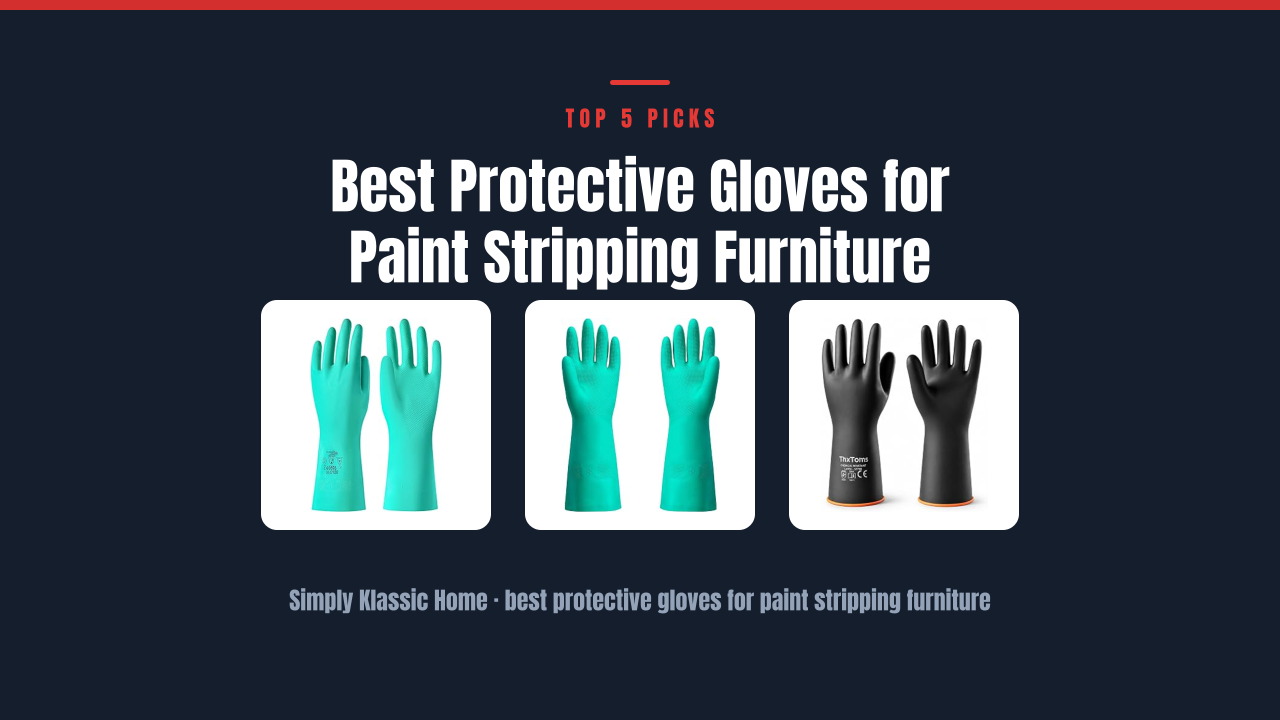
Best Protective Gloves for Paint Stripping Furniture

The best best protective gloves for paint stripping furniture is the COOLJOB 18 Mil Chemical Resistant Nitrile, the only one here that balances heavy solvent resistance with enough finger flexibility to scrape intricate woodwork safely. It gives you dependable protection against harsh paint strippers without making your hands feel clumsy while holding small contour scrapers.

Want extreme thickness against sharp scraper edges instead? The ThxToms 28 Mil Heavy Duty Latex gets you there, as long as you work with water-rinsable or caustic pastes rather than strong solvent-based thinners.

As an Amazon Associate, I earn from qualifying purchases.

This guide highlights the key material differences you need to know before buying, including which gloves melt when exposed to specific chemicals. If you only plan to use heat guns or dry sandpaper, you should skip chemical gloves completely.

Our recommendations come from analyzing chemical resistance charts, manufacturer specifications, and verified buyer track records across thousands of furniture refinishing projects, not physical lab testing.

Quick Answer: The Best Protective Gloves for Paint Stripping Furniture

The COOLJOB 18 Mil Nitrile stands out as the most reliable pick for everyday furniture stripping projects due to its balanced chemical barrier and textured grip.

Thinking about heat guns or mechanical sanding instead? Jump to Who Should NOT Buy below before you spend anything.

Comparison Table

Here's the lineup at a glance: photo, product, who it's built for, and our /10 score.

PhotoProductBest forScoreBuy
COOLJOB 18 Mil Chemical Resistant NitrileCOOLJOB 18 Mil Chemical Resistant NitrileAll-Around Solvent & Stripper Defense9.4/10Check price →
ThxToms Chemical Resistant Nitrile GlovesThxToms Chemical Resistant Nitrile GlovesDetailed Spindle & Carving Work9.0/10Check price →
ThxToms Chemical Resistant GlovesThxToms Chemical Resistant GlovesHarsh Caustics & Heavy Scraping8.7/10Check price →
PACIFIC PPE Chemical Resistant GlovesPACIFIC PPE Chemical Resistant GlovesFull Arm Splatter Protection8.5/10Check price →
BEASTEK Nitrile Disposable GlovesBEASTEK Nitrile Disposable GlovesSmall Touch-Ups & Quick Cleanups8.2/10Check price →

Scroll sideways on small screens to see every column.

COOLJOB 18 Mil Chemical Resistant Nitrile: Best Overall for Stripping Solvents

#1COOLJOB 18 Mil Chemical Resistant Nitrile
COOLJOB18 Mil Heavy-Duty Nitrile
9.4OUT OF 10
Chemical Barrier9.5
Tear Resistance9.4
Grip & Control9.3
Comfort & Sizing9.4
This is the most well-rounded option for stripping varnishes, lacquers, and old paint from dressers or tables. The 18 mil acrylonitrile butadiene polymer construction shields your skin from common furniture stripping solvents like acetone, mineral spirits, and alcohol-based removers. Its 13-inch gauntlet length keeps chemical sludge from creeping onto your wrists when reaching deep into cabinet interiors.
In our research, the diamond-textured palm pattern proved essential for maintaining a secure hold on slick putty knives and steel wool pads. The interior flock lining helps absorb sweat during long stripping sessions, making them easy to slide off when you need a quick break. Because the nitrile material is 100% latex-free, you avoid allergic reactions common with natural rubber.
Flaws but not dealbreakers. The cotton flock lining makes them slightly bulkier at the fingertips than unlined options, which reduces fine tactile feedback on tiny wooden spindles. The 13-inch cuff covers the wrist well, but it stops short of full mid-forearm coverage if you submerge parts in deep wash tubs.
Need more direct tactile feedback for tiny grooves? The ThxToms Chemical Resistant Nitrile Gloves feature an unlined build that offers sharper fingertip precision.
⚠
Sizing: These fit snugly due to the flock lining. If you plan to wear cotton liner gloves underneath or have wider palms, consider sizing up one step.
Pros
  • ✓18 mil nitrile thickness provides durable defense against common stripping solvents.
  • ✓13-inch extended cuff stops caustic sludge from splashing past your wrists.
  • ✓Embossed diamond grip prevents slippery metal scrapers from twisting in your hand.
  • ✓Soft interior flock lining absorbs perspiration during multi-hour restoration projects.
Cons
  • ✕Flock lining reduces fingertip feel on tiny decorative furniture carvings.
  • ✕Cuff does not reach all the way to the elbow for deep dipping tanks.
  • ✕Nitrile will stiffen slightly if stored in cold garage workshops during winter.
Material
Nitrile Polymer
Thickness
18 Mil (0.45 mm)
Length
13 Inches (33 cm)
Lining
Cotton Flocking
Best for: DIY woodworkers and restorers who need reliable solvent protection and a slip-free grip across full furniture builds.

ThxToms Chemical Resistant Nitrile Gloves: Best Dexterity for Fine Detail Work

#2ThxToms Chemical Resistant Nitrile Gloves
ThxTomsFlexible Unlined Solvent Barrier
9.0OUT OF 10
Chemical Barrier9.2
Tear Resistance8.8
Grip & Control9.1
Comfort & Sizing8.9
This pair gives you the tactile control needed to clean carved chair legs and ornate moldings without dropping tools. Its unlined interior profile reduces bulk at the joints, allowing your fingers to bend naturally when maneuvering toothbrushes, wire picks, and steel wool into tight trim corners. The premium nitrile synthetic rubber resists softening from harsh mineral spirits and alcohol washdowns.
User feedback highlights how well the textured fingers grip wet, chemical-soaked rags when wiping away lifted sludge. Because it lacks thick internal padding, it rinses clean inside and out much faster than flock-lined models, drying thoroughly between coats. The 13-inch length ensures reliable wrist defense when handling vertical furniture panels.
Flaws but not dealbreakers. Without a cotton flock lining, sweat accumulates directly against the rubber during hot summer afternoons. The slightly thinner construction means you must be more careful when pressing aggressively against jagged metal scrapers.
Working around jagged screw heads or sharp scraper blades? The heavy-walled ThxToms Chemical Resistant Gloves (28 Mil) provide a thicker physical barrier against accidental gouges.
⚠
Care: Wash the exterior thoroughly with warm soapy water after every use to prevent residual paint stripper from slowly degrading the polymer over time.
Pros
  • ✓Unlined interior provides superior fingertip sensitivity for intricate woodwork details.
  • ✓Durable synthetic nitrile resists degradation from mineral spirits and alcohol washes.
  • ✓Smooth internal surface rinses clean and air dries rapidly after use.
  • ✓Textured fingertips maintain a reliable grip on small brass detail brushes.
Cons
  • ✕Hands can get clammy quickly during extended stripping sessions without a liner.
  • ✕Thinner profile requires greater care around freshly sharpened scraper burrs.
  • ✕Less thermal insulation if working in cold outdoor workshops.
Material
Nitrile Rubber
Thickness
15 Mil (0.38 mm)
Length
13 Inches (33 cm)
Lining
Unlined
Best for: Woodworkers who prioritize finger dexterity and tactile control when stripping ornate carvings and turned spindles.

ThxToms Chemical Resistant Gloves: Best Heavy-Duty Protection for Harsh Caustics

#3ThxToms Chemical Resistant Gloves
ThxToms28 Mil Thick Natural Latex
8.7OUT OF 10
Chemical Barrier8.6
Tear Resistance9.6
Grip & Control8.4
Comfort & Sizing8.2
This heavy-duty pair is designed specifically for aggressive scraping against heavy lead-based finishes and stubborn milk paint. Built from natural latex rubber with a 28 mil wall thickness, it delivers exceptional tear and puncture resistance when working alongside sharp steel scrapers, rasps, and stiff wire brushes. Its extended 14-inch sleeve offers extra forearm coverage against caustic splashes.
Aggregate user reports indicate that the smooth rubber finish withstands caustic alkali-based strippers like sodium hydroxide pastes exceptionally well. The thicker walls also offer physical insulation against friction burns when applying heavy downward pressure to stubborn layers of antique lacquer. It provides noticeable peace of mind when handling sharp edges on stripped furniture hardware.
Flaws but not dealbreakers. Natural latex swells and degrades rapidly if exposed to pure aromatic solvents like xylene or toluene. The 28 mil wall thickness also makes hand articulation stiffer, requiring more grip effort when working on small areas.
Using solvent-heavy formulas or suffer from latex allergies? The COOLJOB 18 Mil Chemical Resistant Nitrile provides full synthetic solvent immunity without rubber proteins.
Compatibility: Avoid using these gloves with concentrated organic solvents or petroleum distillates, as natural latex will soften and swell quickly upon contact.
Pros
  • ✓28 mil latex provides heavy puncture protection against sharp scrapers and wire brushes.
  • ✓14-inch extra-long sleeve shields forearms from heavy caustic chemical splatters.
  • ✓Resists harsh caustic alkaline stripping pastes and sodium hydroxide solutions.
  • ✓Thick rubber barrier reduces hand strain from hard friction when rubbing down wood.
Cons
  • ✕Natural latex rubber degrades when exposed to pure petroleum-based thinners.
  • ✕Heavier 28 mil wall thickness creates hand fatigue during long, intricate jobs.
  • ✕Not suitable for users with natural latex rubber allergies.
Material
Natural Latex
Thickness
28 Mil (0.71 mm)
Length
14 Inches (35.5 cm)
Lining
Unlined
Best for: Heavy stripping tasks using caustic alkaline formulas where sharp scrapers and wire wheels pose puncture hazards.

PACIFIC PPE Chemical Resistant Gloves: Best Value for Multi-Day Restorations

#4PACIFIC PPE Chemical Resistant Gloves
PACIFIC PPE12.6″ Multi-Pack Rubber
8.5OUT OF 10
Chemical Barrier8.4
Tear Resistance8.7
Grip & Control8.5
Comfort & Sizing8.4
This multi-pair bundle is an economical choice when tackling large furniture suites that require several days of messy work. The natural rubber blend provides dependable protection against water-washable chemical gels, mild citrus-based strippers, and alkaline neutralizing baths. Its 12.6-inch cuff prevents drips when applying thick stripping paste overhead onto tall wardrobe cornices.
Review data shows that having backup pairs in your shop keeps projects moving forward if one pair gets saturated or heavily soiled. The textured palm channels away thick, gelled finish residue so you can maintain a solid grip on coarse sanding sponges. The slip-on cuff design allows you to peel them off quickly when answering the phone or grabbing clean supplies.
Flaws but not dealbreakers. The rubber blend will degrade if left soaking in pure lacquer thinner or acetone for extended periods. It also has a distinct rubber scent out of the package that takes a few days of open-air hanging to dissipate completely.
Need dedicated protection against hot solvent rinses and industrial strippers? The COOLJOB 18 Mil Chemical Resistant Nitrile provides superior solvent durability without softening.
Safety: Always check for pinhole leaks before reusing these gloves by filling them with water and gently squeezing the palm area.
Pros
  • ✓Multi-pair packaging offers great value for extensive dining room or bedroom sets.
  • ✓12.6-inch sleeve protects wrists from dripping gel strippers during vertical application.
  • ✓Granulated palm texture improves wet control over scraper handles and scrub pads.
  • ✓Smooth internal finish allows fast removal when stepping away from the workstation.
Cons
  • ✕Not recommended for prolonged immersion in pure ketones or lacquer thinners.
  • ✕Noticeable initial rubber odor requires airing out before indoor use.
  • ✕Slightly looser wrist profile can allow debris in if working upside down.
Material
Natural Rubber
Thickness
15 Mil (0.38 mm)
Length
12.6 Inches (32 cm)
Lining
Unlined
Best for: Refinishers working through large, multi-piece furniture restorations who want economical, easily replaceable pairs.

BEASTEK Nitrile Disposable Gloves: Best Heavy-Duty Disposable for Quick Touch-Ups

#5BEASTEK Nitrile Disposable Gloves
BEASTEK8 Mil Raised Diamond Grip
8.2OUT OF 10
Chemical Barrier7.8
Tear Resistance8.0
Grip & Control8.9
Comfort & Sizing8.1
This heavy 8 mil disposable is perfect for quick hardware stripping, minor veneer patch jobs, and fast cleanups. At roughly double the thickness of standard 4 mil medical gloves, it offers genuine short-term resistance against paint strippers, alcohol washes, and wood stains. The raised diamond texture across both sides provides outstanding grip on slick brass knobs and small hinges.
Editorial analysis of buyer feedback shows that these hold up remarkably well during 30 to 45-minute spot stripping jobs without tearing easily. Because you simply toss them after use, you avoid dealing with sticky, finish-soaked reusable gloves on your workbench. The ambidextrous pattern also means you never waste time finding matching left and right pieces.
Flaws but not dealbreakers. At 8 mil, solvent breakthrough occurs much faster than with 18 mil reusable options, making them unsuitable for prolonged soaking. The standard 9.5-inch wrist length leaves your forearms exposed to chemical spatters if you reach into deep drawers.
Planning an all-day stripping marathon with strong chemical washes? The reusable COOLJOB 18 Mil Chemical Resistant Nitrile provides substantially longer breakthrough times and wrist coverage.
Safety: Discard and replace immediately if the glove swells, becomes sticky, or feels warm against your skin, which indicates chemical permeation.
Pros
  • ✓8 mil heavy nitrile construction resists tears much better than standard 4 mil disposables.
  • ✓Aggressive raised diamond texture delivers reliable traction on greasy, stripped parts.
  • ✓No cleanup required, making them ideal for quick furniture hardware restoration.
  • ✓Ambidextrous design makes grabbing a fresh piece fast and straightforward.
Cons
  • ✕Chemical permeation happens much faster than with heavy reusable models.
  • ✕9.5-inch cuff leaves lower forearms vulnerable to dripping chemical removers.
  • ✕Generates single-use plastic waste throughout long refinishing projects.
Material
Nitrile Polymer
Thickness
8 Mil (0.20 mm)
Length
9.5 Inches (24 cm)
Lining
Powder-Free
Best for: Quick furniture touch-ups, stripping drawer pulls, and applying stains where disposable convenience is preferred.

Buying Guide: Chemical Resistance, Material Thickness, Sleeve Length, and Grip

Stripping antique furniture involves harsh chemical interactions that standard household gloves simply cannot handle. Solvents dissolve old varnish by breaking down chemical polymers, and those same solvents will dissolve low-grade rubber just as quickly. Choosing the correct pair protects your hands from chemical burns and ensures you can properly prepare surfaces before applying new finishes.

Chemical Compatibility and Polymer Type

Nitrile is a synthetic rubber polymer made from acrylonitrile and butadiene that provides exceptional defense against petroleum distillates, mineral spirits, and aromatic solvents. When stripping modern polyurethanes or solvent-heavy paints, synthetic options like the COOLJOB 18 Mil Chemical Resistant Nitrile will not soften or swell rapidly.

Natural rubber latex, by contrast, offers outstanding elasticity and physical tear resistance against water-based pastes and strong caustic strippers like sodium hydroxide. However, natural latex breaks down when exposed to strong ketones and thinners. For workplace safety guidance when handling volatile organic removers, consult the Occupational Safety and Health Administration standards on personal protective equipment.

Material Thickness and Permeation Time

A glove's wall thickness directly determines its chemical permeation rate, which is the time it takes for a chemical to move through the polymer on a molecular level. Thickness in safety gloves is measured in mils, where 1 mil equals 0.001 inches (0.0254 mm).

Our reviewed picks range from 8 mil in disposable formats up to 28 mil in industrial latex:

  • 8 Mil (0.20 mm): Found on the BEASTEK Nitrile Disposable Gloves, this thickness provides 20 to 45 minutes of splash protection for hardware cleaning before requiring replacement.
  • 15 to 18 Mil (0.38 to 0.45 mm): The sweet spot for furniture stripping, offering hours of solvent resistance with enough flexibility to handle delicate scrapers.
  • 28 Mil (0.71 mm): Found on the ThxToms Chemical Resistant Gloves, providing heavy barrier defense and puncture resistance against jagged metal edges.

As of 2026, the standard testing method under ASTM F739 measures continuous chemical contact. Heavier mil ratings consistently yield longer breakthrough times, preventing chemical exposure during deep restoration work.

Sleeve Length and Cuff Coverage

Furniture refinishing often involves reaching deep into dresser cavities, wiping downward across table legs, or scrubbing overhead moldings. Standard 9.5-inch gloves leave your lower forearms exposed to dripping sludge and chemical splashes.

Opting for extended cuffs measuring 12.6 to 14 inches keeps caustic paste away from your bare arms when scraping vertical surfaces. If you are refinishing large tables or preparing pieces for how to avoid brush strokes with chalk paint, longer sleeves prevent chemical burns during vigorous scrubbing.

Surface Grip Patterns and Wet Control

Chemical strippers turn old paint into a slimy, gelatinous sludge that makes tools extremely slippery. Plain smooth gloves allow metal scraper handles to twist out of alignment, causing gouges in soft antique pine or mahogany.

Look for embossed diamond patterns or granulated palm textures. These raised channels displace viscous chemical residue, ensuring a firm grip on contour scrapers, brass brushes, and coarse stripping pads.

Who Should NOT Buy Best Protective Gloves for Paint Stripping Furniture

Chemical-resistant gloves are the wrong purchase for certain restoration methods and workshop environments. Here is when you should choose different protective gear instead.

You Are Stripping Furniture with a High-Heat Heat Gun

Heat guns soften old paint using concentrated thermal air reaching temperatures between 500°F and 1000°F (260°C to 538°C). Chemical stripping gloves made of nitrile, latex, or PVC will melt, char, or fuse to your skin upon accidental contact with a hot heat gun nozzle or heated scraper blade.

If you use thermal stripping methods, choose heavy-duty split cowhide leather work gloves or heat-resistant aramid fiber gloves instead. Leather provides structural thermal insulation without melting.

You Are Removing Finish Using Dry Power Sanding

Dry sanding removes old finishes through mechanical abrasion using orbital sanders, belt sanders, or detail sanding blocks. Chemical-resistant rubber gloves trap heat and moisture, causing severe hand sweating while offering poor abrasion resistance against coarse 60-grit aluminum oxide sandpaper.

For sanding wood to paint furniture without leaving brush marks, choose lightweight mechanics gloves with synthetic leather palms or breathable, polyurethane-dipped nylon work gloves.

Final Verdict

The COOLJOB 18 Mil Chemical Resistant Nitrile remains the top recommendation for furniture refinishers tackling old varnishes and paints. Its 18 mil barrier defends against strong solvents, while the diamond-textured palm ensures your scraper stays firmly planted on flat boards and carved edges.

Want better tactile feel for delicate carvings and tight trim profiles? Get the ThxToms Chemical Resistant Nitrile Gloves, which feature an unlined build that maximizes finger agility.

Need maximum puncture defense against wire brushes and sharp scraping tools? The ThxToms Chemical Resistant Gloves (28 Mil) provide heavy latex wall thickness for stubborn caustic strippers.

If you plan to use thermal heat guns or power sanders instead of chemical removers, review the Who Should NOT Buy section to pick the right protective gear for your project.

FAQ

What is the best Protective Gloves for Paint Stripping Furniture overall?

The COOLJOB 18 Mil Chemical Resistant Nitrile is the best overall choice because it combines heavy synthetic solvent resistance with a non-slip diamond grip and a sweat-absorbing flock lining.

Can I use regular yellow household cleaning gloves for paint stripping?

Standard household dishwashing gloves are usually made of thin, 10 to 12 mil natural rubber that dissolves or swells rapidly when exposed to paint stripping solvents like acetone and mineral spirits. Using them risks severe chemical burns when aggressive solvents permeate the thin rubber.

Are nitrile or latex gloves better for chemical paint strippers?

Nitrile gloves are superior for solvent-based strippers containing mineral spirits, alcohols, or petroleum distillates because synthetic nitrile does not swell quickly in organic compounds. Natural latex gloves are better suited for water-based, caustic alkaline stripping pastes like sodium hydroxide, provided no harsh organic solvents are present.

What glove thickness is best for stripping furniture?

A thickness between 15 mil and 18 mil provides the ideal balance of chemical permeation resistance, puncture strength, and finger flexibility for furniture scraping. Heavy 28 mil gloves offer superior puncture defense but reduce dexterity on intricate wood carvings.

How do I clean and store chemical gloves after stripping furniture?

Wash the outside of your gloves with warm soapy water while still wearing them to remove all lingering paint sludge, then rinse thoroughly. Hang them by the cuffs in a cool, dry area away from direct sunlight, as UV rays and solvent residue degrade rubber polymers over time.

Can I reuse disposable 8 mil nitrile gloves for stripping?

Disposable 8 mil nitrile gloves should be discarded after a single stripping session or as soon as they show signs of swelling, stickiness, or stretching. Thin single-use polymers suffer rapid chemical permeation and lose their protective barrier once saturated with solvents.

For more details about our site policies and review process, please visit our editorial disclosure page or check our privacy practices and terms of service. If you have questions regarding your project setup, you can reach out via our contact form.

Share.

Similar Posts

Leave a comment

Your email address will not be published. Required fields are marked with an asterisk.

Classic Sofa Throw Pillow Arrange…How to Paint Furniture Without Br…Perfect Chalk Paint: No Brush Str…Master Classic Fireplace Mantel S…COZAYH Farmhouse 3-Drawer Dresser…Healthy and Flavorful Jell-O Sala…Simple & Affordable Pecan No…How to Make Delicious Hot Honey G…Velvety Purple Mashed Potatoes Re…How to Choose Curtains for a Clas…
Share