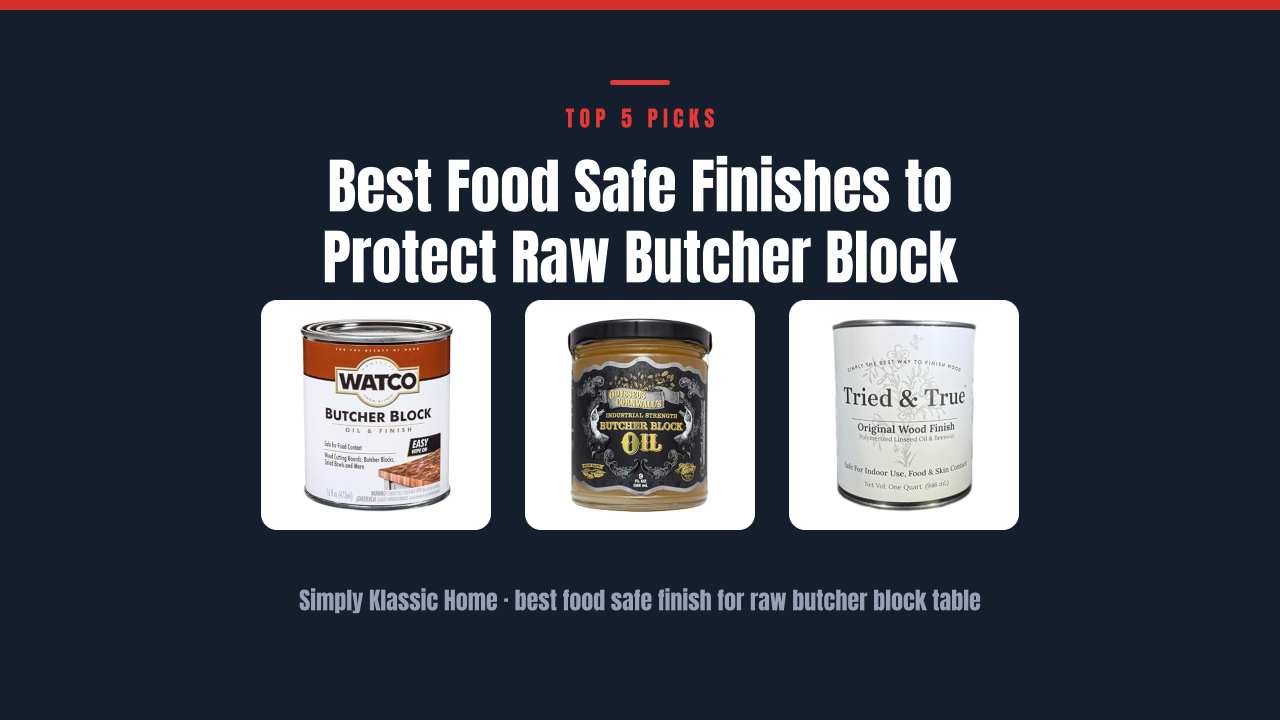
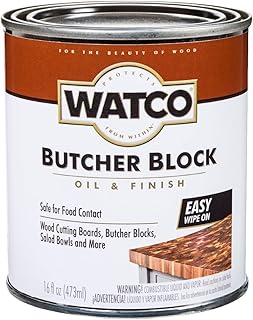
The best best food safe finish for raw butcher block table is the Watco Butcher Block Clear Oil & Finish, which creates an ultra-durable, moisture-repellent barrier that cures completely non-toxic for active dining and light prep areas. It gives raw wood rich depth while forming a hard surface film that resists water rings and food stains far better than standard oils alone.
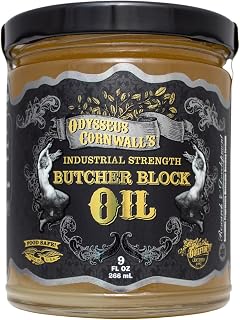
Want a zero-VOC, natural single-coat application instead? The Odie's Industrial Strength Butcher Block Oil gets you remarkable grain enhancement and heavy liquid resistance, as long as you are willing to buff it out thoroughly with some elbow grease.
As an Amazon Associate, I earn from qualifying purchases.
Before spending money on specialty sealers, remember that finishing a raw table differs significantly from sealing a dedicated chopping board. If you plan to cut raw meat directly on your dining surface daily or want an indestructible plastic-like epoxy shell, traditional food-contact oils will not suit your project.
Our editorial team compiled this research using manufacturer technical datasheets, regulatory standards from the U.S. Food and Drug Administration, and verified feedback from hundreds of woodworkers and homeowners who have sealed raw maple, walnut, and oak surfaces.
Quick Answer: The Best Food Safe Finish for Raw Butcher Block Table
For most raw wood tables, Watco Butcher Block Clear Oil & Finish offers the ideal balance of liquid resistance, easy wipe-on application, and long-lasting surface protection.
This is the top pick for dining tables because it builds a true wipe-clean surface barrier while remaining non-toxic once cured. Unlike raw mineral oil that washes away after a few soapy cleanings, Watco combines penetrating oils with specialized curing resins. It dries to a smooth, low-sheen satin finish that resists condensation rings, coffee drips, and olive oil spills.
Manufacturer specifications indicate that Watco Butcher Block finish fully cures within 72 hours, complying with FDA regulations for incidental food contact surfaces. Application is remarkably forgiving: wipe it across raw wood with a lint-free cloth, let it soak for 10 minutes, and wipe off the excess. Applying three thin coats spaced 6 hours apart creates an exceptionally resilient tabletop seal.
Flaws but not dealbreakers. Because it cures into a solid microscopic film, it contains mineral spirits during the liquid phase that require adequate room ventilation during application. Furthermore, if you plan to use cleavers or heavy chef knives directly on the tabletop surface without a cutting board, deep blade gouges will break the surface film over time.
Need a completely solvent-free, zero-VOC formula you can apply safely in an unventilated apartment? The Tried & True Original Wood Finish below delivers outstanding food-safe protection without any chemical solvents.
⚠
Safety: Open windows during application to ventilate solvent vapors, and wait a full 72 hours for complete resin curing before placing hot dishes or food items directly on the table.
Pros
✓Forms a durable micro-film that resists water rings and grease spots
✓Easy wipe-on wiping process requires no specialized brushing tools
✓Dries to touch in under 6 hours between coats
✓Cures completely non-toxic for safe mealtime dining
Cons
✕Emits solvent odor until dry, requiring room airflow
✕Not designed for aggressive direct knife chopping
✕Requires sanding before reapplying if heavily scratched
Finish Type
Oil & Resin Blend
Dry Time
6 Hours / Coat
Full Cure
72 Hours
Sheen
Warm Satin
Best for: Homeowners who want a durable, wipe-clean dining or island tabletop without frequent monthly oiling.
This concentrated formula delivers exceptional water resistance and grain depth from a single jar without any chemical solvents. Odie’s Industrial Strength Butcher Block Oil relies on natural waxes and food-safe drying oils that bond with wood fibers on contact. A tiny dab spreads across substantial square footage, making the compact 9-ounce jar surprisingly capable of handling multiple large tables.
Verified buyer feedback confirms that Odie’s excels at repelling standing water and common kitchen liquids like red wine and lemon juice. The application technique requires friction: rub a minimal amount into the wood using a non-woven pad, allow it to set for 45 minutes, and then buff the surface thoroughly until completely dry to the touch.
Flaws but not dealbreakers. Proper application demands physical effort because any excess oil left on the tabletop will dry sticky and hazy. If you buff prematurely or leave pools behind, correcting the tacky finish requires vigorous re-buffing with a clean cotton towel.
If you prefer a thinner, purely liquid oil that soaks in without heavy manual buffing, consider Hope’s 100% Pure Tung Oil which penetrates deep into open grain patterns.
Care: Always buff off 100% of the surface residue within 45 to 60 minutes of application, as excess hardwax will dry to a gummy texture if left unbuffed.
Pros
✓100% solvent-free and non-toxic for complete family safety
✓Exceptional coverage from a compact 9-ounce container
✓Single coat is often sufficient for closed-grain hardwoods
✓Leaves a lustrous, water-beading hardwax surface
Cons
✕Requires intense manual buffing to remove all excess residue
✕Higher initial cost per ounce compared to traditional oils
✕Takes several days to achieve maximum surface hardness
Volume
9 Fl Oz
VOC Content
Zero VOC
Coats Needed
1 to 2 Coats
Origin
Made in USA
Best for: Woodworkers and homeowners seeking a zero-VOC, professional-grade hardwax finish that enhances wood figure.
This traditional blend contains only highly refined polymerized linseed oil and natural beeswax, offering complete purity for indoor dining. Tried & True uses heat processing rather than chemical metallic driers to accelerate curing, making it safe for skin contact, children, and food preparation. The resulting tabletop finish has an authentic hand-rubbed luster that enhances raw walnut, cherry, and oak.
Because the formula contains zero solvents or VOCs, you can safely apply it inside your kitchen or living room with no protective respirators needed. Editorial analysis of user reports indicates that applying two to three paper-thin coats produces a silky tactile finish that repels minor liquid spills effectively.
Flaws but not dealbreakers. Heat-polymerized linseed oil cures slowly compared to resin finishes, taking roughly 24 hours between coats in standard room humidity. Additionally, standing water left overnight can cause temporary cloudy spots in the wax layer, requiring an occasional maintenance rubdown.
If your butcher block table will see heavy beverage condensation or frequent wet dishware, the resin-reinforced Watco Butcher Block Clear Oil & offers superior water-spot resistance.
Safety: Lay oily application rags flat outdoors to dry before disposal, as curing natural linseed oil generates heat through oxidation and can present a spontaneous combustion risk if crumpled.
Pros
✓100% natural formula with zero heavy-metal driers or VOCs
✓Produces a rich, authentic antique satin luster
✓Completely safe to apply indoors without ventilation masks
✓Beeswax component adds natural water repellency
Cons
✕Requires 24 hours of drying time between coats
✕Standing liquid can leave temporary blush marks if left unattended
✕Demands thin, disciplined wiping to prevent gummy spots
Size
Quart (32 Fl Oz)
VOC Content
Zero VOC
Base
Linseed Oil & Beeswax
Sheen
Antique Satin
Best for: Allergy-sensitive households, nurseries, and renters who need a genuinely zero-emission finish they can apply indoors tonight.
Mineral oil is the honest budget choice for raw prep surfaces, and this bottle is about as pure as it gets. Kate Naturals ships a single-ingredient, USP food-grade mineral oil with no driers, fragrances, or mystery additives. Unlike vegetable oils, it never goes rancid inside the grain.
Application could not be simpler. Flood the raw wood, let it soak for 20 to 30 minutes, then wipe everything back off. Verified buyer feedback shows it absorbing quickly into bare maple and beech with zero lingering odor, which matters a lot in small kitchens.
Flaws but not dealbreakers. Mineral oil never cures, so it sits in the pores instead of hardening into a film. That means monthly reapplication and the weakest spill protection of the five picks here.
Pure tung oil is the only finish here that cures into a genuinely waterproof film from a single natural ingredient. Hope’s bottles nothing but tung nut oil, which polymerizes by drawing oxygen from the air. The cured layer is flexible, hand-rubbed matte, and shrugs off condensation better than any wax blend.
The trade is patience. Manufacturer guidance calls for 3 to 5 paper-thin coats with 5 to 7 days of drying between each, so budget 15 to 25 days before real use. Thinning the first coat 50/50 with a citrus solvent helps it bite into raw grain.
Flaws but not dealbreakers. That multi-week schedule rules it out if you need the table by the weekend. Households with tree-nut allergies should also skip pure tung, since it is pressed from nuts.
Need food-safe protection in days instead of weeks? The Watco Butcher Block Clear Oil & cures fully in 72 hours with far better ring resistance than raw mineral oil.
⚠
Curing: Let each coat dry 5 to 7 days before lightly scuffing and recoating, and keep the table completely dry for at least two weeks after the final coat.
Pros
✓One ingredient only: no driers, solvents, or synthetic resins
✓Polymerizes into a flexible, water-impermeable film
✓Classic hand-rubbed matte that flatters farmhouse tables
✓16-ounce bottle covers large tops in several thin passes
Cons
✕Demands 5 to 7 days of drying between every coat
✕Full waterproof hardness takes several weeks to develop
✕Unsuitable for homes with tree-nut allergy concerns
Volume
16 Fl Oz
Purity
100% Tung Oil
Coats
3 to 5 Thin Coats
Sheen
Hand-Rubbed Matte
Best for: Patient DIYers restoring a heritage or farmhouse table that will face real moisture.
Buying Guide: Cure Time, Food Safety, Water Resistance and Maintenance
A food-safe finish lives or dies on four practical questions: when can you use the table, what is actually in the bottle, how well it repels liquid, and how often you'll be back on your knees with a rag. Here's how this lineup answers each one.
How Long Before You Can Eat at the Table?
Cure time is the single biggest difference in this group, and it ranges from 72 hours with Watco to roughly three weeks with Hope's pure tung oil. Dry-to-the-touch and fully cured are not the same thing. Mineral oil technically never cures at all, which is why it needs constant topping up.
Thin coats matter more than thick ones with every product here. Wipe-on application also beats brushing for raw wood, and the same logic behind streak-free hand finishing on painted pieces applies to oils: less material per pass means fewer ridges and drips to sand out later.
Film-Forming vs. Penetrating Oil Finishes
A film-forming finish hardens into a continuous protective layer on top of the wood, while a penetrating oil soaks into the fibers and stays soft. That distinction drives everything. Watco Butcher Block Clear Oil & and Hope's tung oil form films that can shrug off a forgotten glass of water for hours.
Odie's sits in between as a hardwax hybrid, while Kate's mineral oil is purely penetrating and needs spills wiped within minutes.
If you've ever fought brush marks on painted furniture, you already know the value of a flawlessly smooth coat. Wipe-on oils sidestep that problem entirely, which is why so many woodworkers prefer them on large tabletops.
Indoor Air Quality and VOC Levels
Volatile organic compounds (VOCs) are solvent vapors that off-gas as a finish dries. Four of the five picks here are effectively zero-VOC: Odie's, Tried & True, Hope's, and Kate Naturals can all be applied indoors without respirators. Watco is the exception, carrying mineral spirits during application, so open a window and give it airflow until dry.
On the food-safety question, every manufacturer here frames its product as safe for food contact once fully cured, with Watco specifically citing FDA compliance after its 72-hour cure window. The key phrase is "once cured." A finish that is still wet or tacky is not yet food safe, regardless of the label.
The Maintenance Commitment You're Signing Up For
Be honest with yourself about upkeep before you buy. Mineral oil demands reapplication every 3 to 4 weeks, roughly a dozen sessions a year. Odie's hardwax needs refreshing every 3 to 4 months.
Film finishes like Watco and tung oil can go 6 to 12 months between maintenance coats, sometimes longer on dining tables that see light use.
Wood that stays conditioned also lasts structurally longer; the University of Minnesota Extension notes that properly finished wood resists cracking and splitting as humidity swings through the seasons. A finish isn't just about looks, it's about keeping the slab stable. For more timeless home projects beyond the kitchen, browse our inspiration library.
Who Should NOT Buy Best Food Safe Finish for Raw Butcher Block Table
A food-safe oil finish is the wrong purchase for a few specific kinds of buyers. Here's who they are, and what to look at instead.
You Need an Indestructible Bar-Top Surface
If your table will host hot pans, nightly cocktail rings, and sticky spills with zero coasters, no oil will save it. Even the best finish here is a soft, repairable layer, not armor. What you want is a two-part epoxy bar top or a catalyzed conversion varnish, both of which cure rock hard.
The trade-off is that those products are generally not food-safe in the same way, so decide which matters more.
You Want to Chop Directly on the Table Daily
Nobody should be carving roasts directly on a finished dining surface. Every film-forming pick here, from Watco to tung oil, will be gouged by knife work within months, and each cut line breaks the waterproof seal. Buy a dedicated end-grain cutting board and condition it separately with mineral oil.
Keep the table for serving and eating, and both surfaces will last far longer.
You Want a Painted, Zero-Grain Look
Oil finishes enhance wood grain; they can never hide it. If your heart is set on a solid-color, painted, or lacquered look, oils are the wrong tool entirely and you'll be disappointed with the result. Go with furniture paint and a compatible topcoat instead, and save these oils for a future raw-wood project.
Final Verdict
For most raw butcher block tables, the Watco Butcher Block Clear Oil & is the smartest buy. It's the only pick that combines a 72-hour cure, a genuine water-resistant film, and simple wipe-on application, which is exactly the mix a dining table needs.
Want a completely solvent-free route? Get the Odie's Industrial Strength Butcher Block Oil, a zero-VOC hardwax that beads water after one buffed coat. Restoring an heirloom that faces real moisture?
Once the surface cures, the fun part starts: dressing the room, from mantel styling ideas to coordinating pillows on nearby sofas. And if any of the skip-cases above sounded like you, reread the Who Should NOT Buy section before spending anything.
FAQ
What's the best Food Safe Finish for Raw Butcher Block Table overall?
The Watco Butcher Block Clear Oil & Finish takes it, thanks to its 72-hourcure, a wipe-on application that takes minutes, and a cured resin film that resists water rings better than any pure oil here.
Is pure tung oil really food safe for a dining table?
Yes, once fully cured. Pure tung oil is a single natural ingredient that polymerizes into an inert film, and it has been used on food-contact wood for centuries. Just note that it takes 3 to 5 thin coats with about a week of drying between each, and households with tree-nut allergies should pick a different option.
How often should I reoil a butcher block table?
It depends entirely on the finish. Mineral oil needs topping up every 3 to 4 weeks, hardwax oils like Odie's hold up for 3 to 4 months, and film-forming finishes like Watco or cured tung oil can go 6 to 12 months. The simple test: if water no longer beads on the surface, it's time for a maintenance coat.
Can I just use mineral oil on a raw butcher block table?
You can, and it's the cheapest safe option, but understand what you're getting. Mineral oil never cures, so it offers minimal water resistance and demands frequent reapplication. It's ideal for prep surfaces, but a dining table that sees drinks and plates will thank you for a curing finish instead.
How many coats does a butcher block finish need?
Plan on 3 coats for most of this lineup. Watco needs three thin passes spaced about 6 hours apart, Odie's often does the job in one buffed coat on closed-grain hardwoods, and Hope's tung oil wants 3 to 5 coats with longer drying. Thin coats beat thick ones every time, because thick oil pools and turns gummy.
Do I need to sand raw butcher block before finishing?
Yes, lightly. Start with 120-grit to level any mill marks, then finish with 180 or 220-grit, always sanding with the grain. Vacuum the dust, wipe the slab with a barely damp cloth, and let it dry fully before the first coat, because any dust left behind will be sealed under your finish permanently.